Campaign state that survives the night
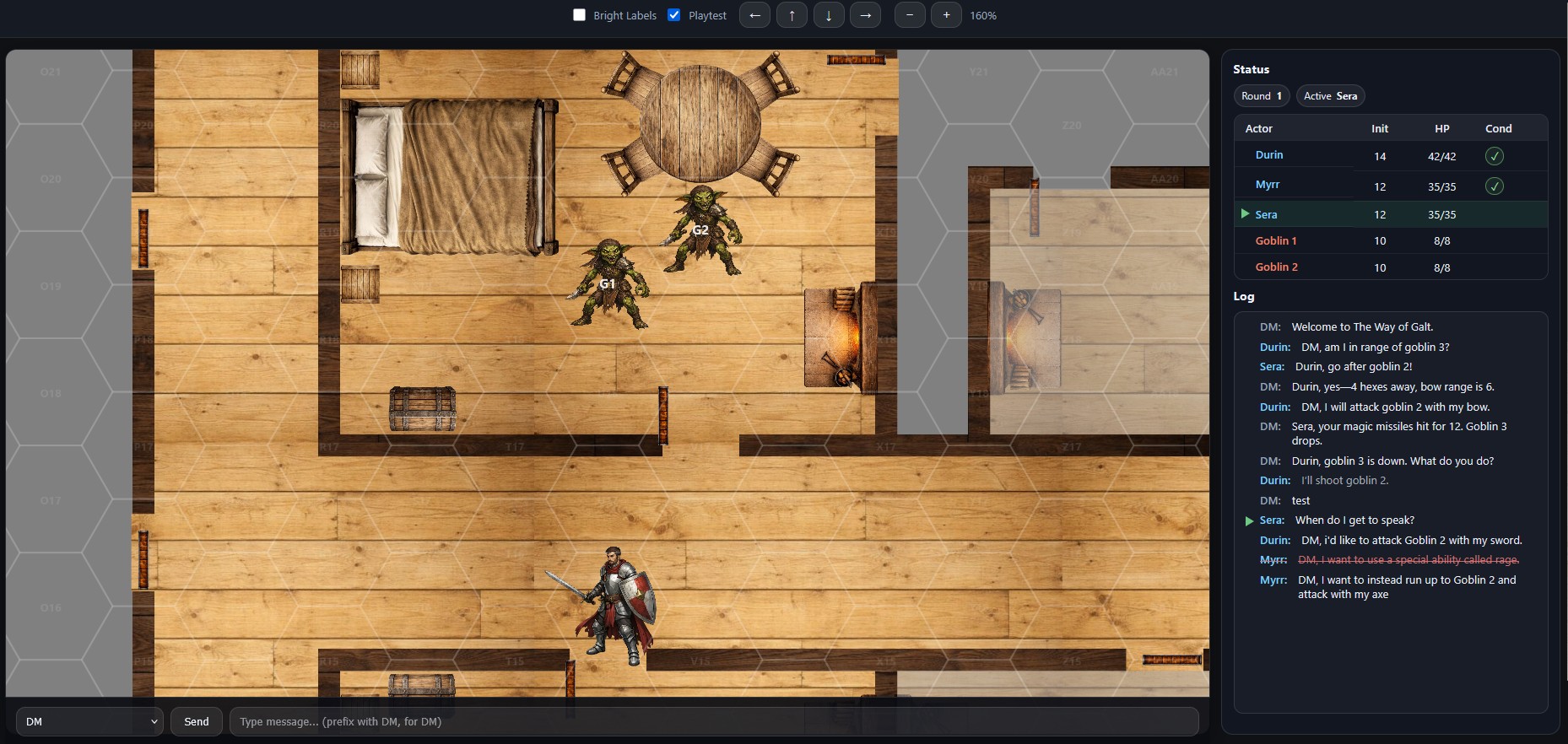
The map, actors, fog, and turn state are meant to live in one durable campaign workspace. Updates should be incremental and legible: move a token, open a door, clear a ring of fog, and keep the scene intact.
Project
The strongest legacy Battlemat copy still points in the right direction: shared play needs a world state with memory, ownership, and consequence. What has changed is where that runtime lives. This site explains the project; the live workspace is elsewhere.
The map, actors, fog, and turn state are meant to live in one durable campaign workspace. Updates should be incremental and legible: move a token, open a door, clear a ring of fog, and keep the scene intact.
Tokens stop being loose UI markers when they connect back to Character Sheets and campaign context. That is what turns a battle scene into campaign play.
The Battlemat is designed to render the canonical scene reliably. It does not invent truth. The authoritative state lives in the campaign workspace and the board shows what has already been committed.
Design Summary
Legacy design notes described the Battlemat as the tactical surface for play: hex-based scenes, initiative, conditions, openings, and objects, all rendered from one scene document. That is still the right abstraction for the public page.
The system goal is plain enough to say without shipping the runtime here: players watch a shared board update while the wider campaign workspace coordinates Battlemat, Character Sheets, and Campaign Management. The board stays simple. The world behind it stays canonical.
Start Here
This is the best order for understanding the current campaign workspace model.